Lead User Researcher · Mixed-Methods · Strategic Thinker · Storyteller · Mentor
Definitely looking for a Lead User Researcher role. Probably still looking for my glasses. 🤷♀️
UNMODERATED TESTING · ITERATIVE RESEARCH · B2B SAAS BANKING PLATFORM · CRAFT
When design changes aren't enough
The client wanted a visual refresh. Two rounds of unmoderated testing revealed why surface-level changes could only go so far and gave a new VP the evidence she needed to push for something bigger.
MY ROLE
Lead researcher
TIMELINE
~24 across two rounds
METHODS
Unmoderated usability testing, design system audit, internal user interviews
CONTEXT
Ongoing retainer,
in progress
THE CHALLENGE
Our client wanted a visual refresh. They had a long-tenured stakeholder with a clear vision for what the product needed, and it was largely aesthetic. Our design team could see deeper issues — workflow friction, structural inconsistencies, problems that a reskin wouldn't resolve — but with a hands-on, change-resistant stakeholder, there hadn't been an opening to raise it directly.
THE PLAN
I proposed unmoderated usability testing. The product section in question — profile options within the software — wasn't something users interacted with frequently, which made scheduling moderated sessions impractical and incentive costs prohibitive. Unmoderated testing let us observe actual behavior rather than recalled behavior, and reach more participants within the budget and timeline.
ROUND ONE
Round one revealed a clear split: one area tested well, several others performed poorly. I flagged the possibility that the underperforming areas pointed to something structural, while also recommending specific design changes the team could act on immediately. The client agreed to revisions and a second round.


ROUND TWO
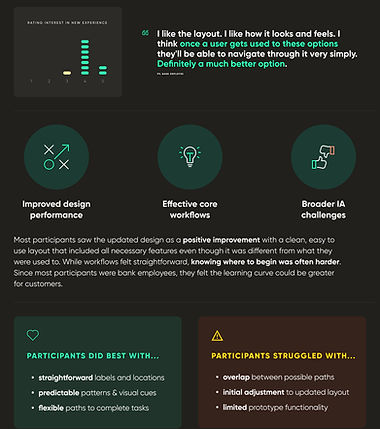
In round two, some areas that had received design attention improved. But those underperforming areas stayed the same, even after design revisions. That pattern highlighted that design updates could move the needle on specific touchpoints, but they couldn't resolve the underlying experience.
THE OUTCOME
A new VP had recently joined the organization and was already trying to shift the team's mindset toward more meaningful product investment. Our research gave her something concrete to stand behind. The engagement expanded to include a design system audit and internal user interviews, and the scope of what was possible grew from there.